Calm Under Pressure: What the Science of Microcurrents Reveals About Stress Management
The Weight of Duty in Critical Environments
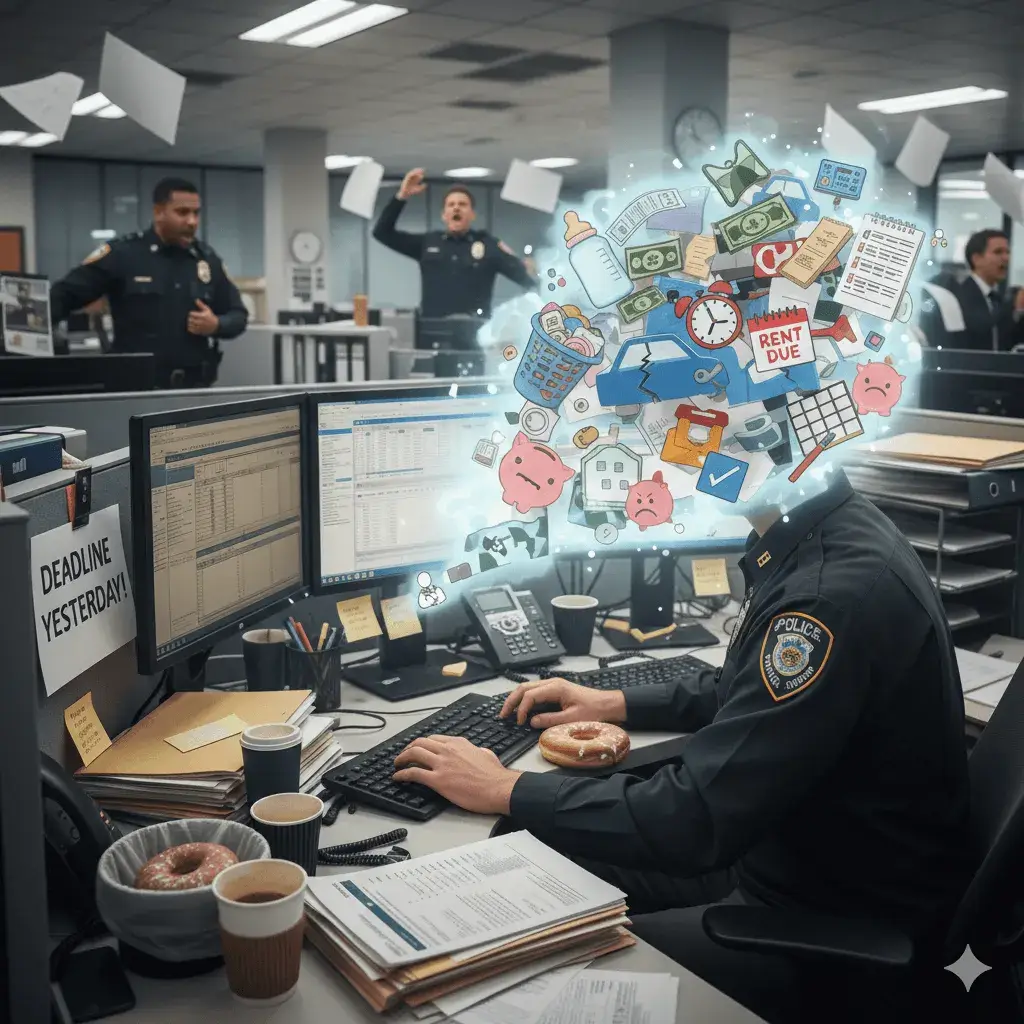
The work of a patrol officer or security personnel in correctional facilities is not only measured in hours of service, but in the invisible endurance of their nervous system. The work context in these critical environments imposes a constant load; it is a challenge where perpetual vigilance and the possibility of imminent conflict erode the mental balance of the personnel. This accumulated tension not only affects operational performance, but also manifests physically, depleting the vitality reserves of those who wear the uniform. In the face of this scenario, there arises the need to explore how technological innovation can assist these professionals without resorting to chemical-based methods. The purpose of this analysis is to detail the findings of a study on Cranial Electrotherapy Stimulation (CES), a modality designed to positively transform the human response to extreme stress.
A Technological Alternative at Hand
Cranial Electrotherapy Stimulation, applied through the device, emerges as a highly efficient intervention for law enforcement and corrections agencies. Unlike chemical-based protocols, which are often costly and may present refractory cases—where the subject does not respond to the substance—this technological modality offers a direct and economical approach.
The technical specifications of the protocol stand out for their simplicity: · Application mechanism: The device uses a pair of clips that are placed on the earlobes to transmit low-intensity microcurrents. · Time management: Sessions require only 20 minutes daily. · Operational versatility: The design allows application while the officer performs administrative tasks or guard duties. · Economic viability: It represents a significantly lower investment compared to the expenses derived from prolonged chemical interventions and their possible side effects.
Impact on Behavior: Hostility and Mental Clarity
The most compelling finding of the study centers on the marked decrease in indicators of hostility and disorganized thinking. In the ecosystem of a prison, where decision-making must be ice-cold and precise, this reduction in negativity is vital. The statistical data are revealing: although 11 of the 14 psychological measurement scales showed statistically significant changes, the trend test (Sign Test) demonstrated that 100% of the 14 measures evaluated shifted positively toward an attenuation of tension.
This transformation allows the officer to regain control over impulsive reactions. The study highlights this transition through the following analysis: “A decrease was found in hostility, somatization, disorganized thinking, obsessive-compulsive symptoms, two measures of anxiety, and two measures of depression.”
Reducing mental confusion and anger not only protects the officer, but also refines the quality of their interactions with inmates and the public, facilitating a safer environment for everyone.
From Constant Worry to Physical Energy
The CES intervention demonstrated that personnel not only experienced a decrease in their levels of restlessness, but also managed to channel their vitality more productively. The study introduces the concept of “cortical control,” a process through which the brain effectively manages emotions, preventing emotional dysfunctions from clouding judgment. This strengthening of cortical control allowed officers to maintain clarity of thought even in highly intense prison situations.
When comparing the pre-protocol state with the final results, it was observed that physical energy stopped being consumed by states of worry and anxiety and instead became available for a more solid operational focus. Participants reported feeling more capable and with renewed physical readiness to face the demands of their shift, transforming fatigue into optimized response capacity.
Results That Extend Beyond the Work Shift
One of the most human aspects of the study was observing how the benefits of microcurrent technology accompanied officers to their homes. Temperament outside of service underwent a positive metamorphosis, directly impacting family harmony and the perception that loved ones had of the officer’s well-being.
Direct testimonials from the personnel reflect this profound change: “I feel more relaxed and less irritable. My thoughts are not so negative.” “Approximately one week after completing the 20 sessions, my husband asked me if I was still using ‘that thing with the clips on the ears.’ I replied asking if he could buy one to have at home.”
These comments validate that the reduction in work-related tension is not an isolated fact, but rather elevates the overall quality of life of the security officer.
Toward a New Standard of Operational Well-Being
The data presented suggest that Cranial Electrotherapy Stimulation is not just a technological tool, but a new standard in protecting the most valuable resource of any agency: its personnel. By facilitating mental and physical balance through a non-invasive intervention, real support is provided to those who operate under extreme pressure. Given the evidence that it is possible to transform the biological response to stress without adverse side effects, the question arises: Is the integration of these protocols the next logical step in the evolution of high-risk professions to ensure sustainable and safe human performance?